Long live the family
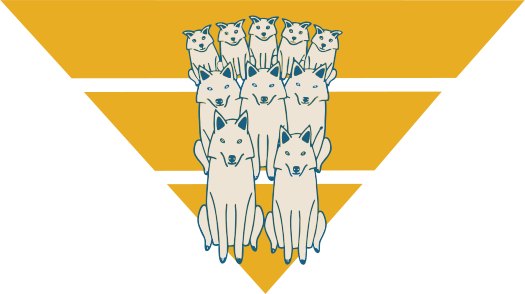
Wolves usually live in packs. This is the name given to the group, which is similar in structure to a human family. A wolf pack typically consists of the parent pair, their pups from the current year, and the young from the previous year (yearlings). The size of the pack usually varies between 5 and 10 wolves throughout the year.
The puppies
Most litters consist of 4 to 6 puppies. Due to illness, lack of food or accidents, only around 50 per cent survive their first year.
The yearlings
At the age of 1 to 2 years, young animals of both sexes leave their parents’ territory. Some travel hundreds of kilometres. Others try to settle near their parents in order to start a family of their own.
The parents
The male and female raise their young together. The parent pair assume the leadership role within the pack by virtue of their natural authority.
3 Myths about wolf packs
Pack stability
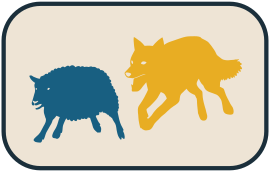
The loss of a parent (e.g. in a collision with a vehicle or as a result of being shot) can threaten the social structure within a pack. This leaves the inexperienced young animals without guidance and supervision. They are then often responsible for attacks on farm animals.
Gathering
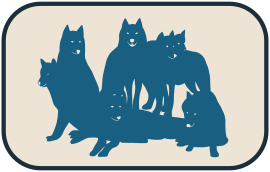
a pack does not consist of a mixed group of adult wolves with a fluctuating hierarchy. Instead, a pack always consists of a family unit. In exceptional cases, however, individual stray animals may also be tolerated.
Alpha wolf
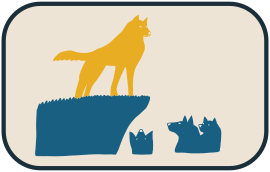
Contrary to what is often portrayed, there is no alpha wolf within a pack, nor are there any battles for dominance. Instead, the parents lead the pack. The female plays a particularly important leadership role in this regard.